

Key Takeaways
- Changes in vision, sleep, balance, and orientation can increase the risk of nighttime falls for people living with dementia.
- Memory Care communities use overnight support, familiar routines, safer apartments, and clear pathways to reduce fall risks.
- Daytime movement, consistent routines, nutrition, and engagement can also support resident safety.
- Elmore Place combines Care Partner support with technology designed to improve fall response.
- Our SafelyYou technology alerts Care Partners when a fall occurs so they can respond promptly while respecting resident privacy.
What Overnight Safety Looks Like in Memory Care
Nighttime can introduce different safety concerns for a loved one living with dementia. Lower lighting, disrupted sleep, changes in balance, and moments of disorientation can make it harder to move safely through otherwise familiar surroundings. For family caregivers, overnight safety can become an important consideration when a loved one begins needing more support.
Memory Care communities can reduce nighttime fall risk through overnight support, safer surroundings, consistent routines, and technology that supports a timely response. And at Elmore Place, these measures work together to address both safety and the individual needs of people living with dementia.
Why Nighttime Feels Riskier for a Loved One With Memory Loss
Dementia can affect orientation and how a person interprets their surroundings. Combined with changes in sleep, balance, or mobility, these effects can make moving around at night more difficult. Eventually, a person with cognitive decline is at a higher risk of falls due to:
- Dim surroundings, which can make furniture and other obstacles harder to see.
- Disorientation after waking, which can make familiar surroundings harder to recognize.
- Nighttime bathroom trips, especially when someone is tired or still adjusting after waking.
- Changes in depth perception, which can make shadows or flooring transitions difficult to interpret.
- Disrupted sleep, which can affect alertness during nighttime movement.
- Restlessness or confusion that leads someone to get out of bed during the night.
- Changes in strength, balance, mobility, or medication that can add to existing fall risks.
Memory Care communities can account for these different factors through an environment designed around the needs of people living with dementia.
How Memory Care Keeps Residents Safe at Night
Nighttime safety works best when support is built into the environment and the resident’s routine. Memory Care communities can combine personal assistance with practical changes that make nighttime movement easier.
Overnight Care and Support
Care partners can assist with bathroom trips, getting in and out of bed, or periods of nighttime confusion. Their presence also means changes in a resident’s usual movement or behavior can be noticed and addressed.
Familiar Routines and Personalized Support
Familiar evening habits can provide structure at the end of the day. Care partners can learn whether someone prefers to read before bed, listen to music, or follow another routine and adapt their support accordingly. This familiarity also makes changes from a resident’s usual patterns easier to recognize.
Safer Apartment Design
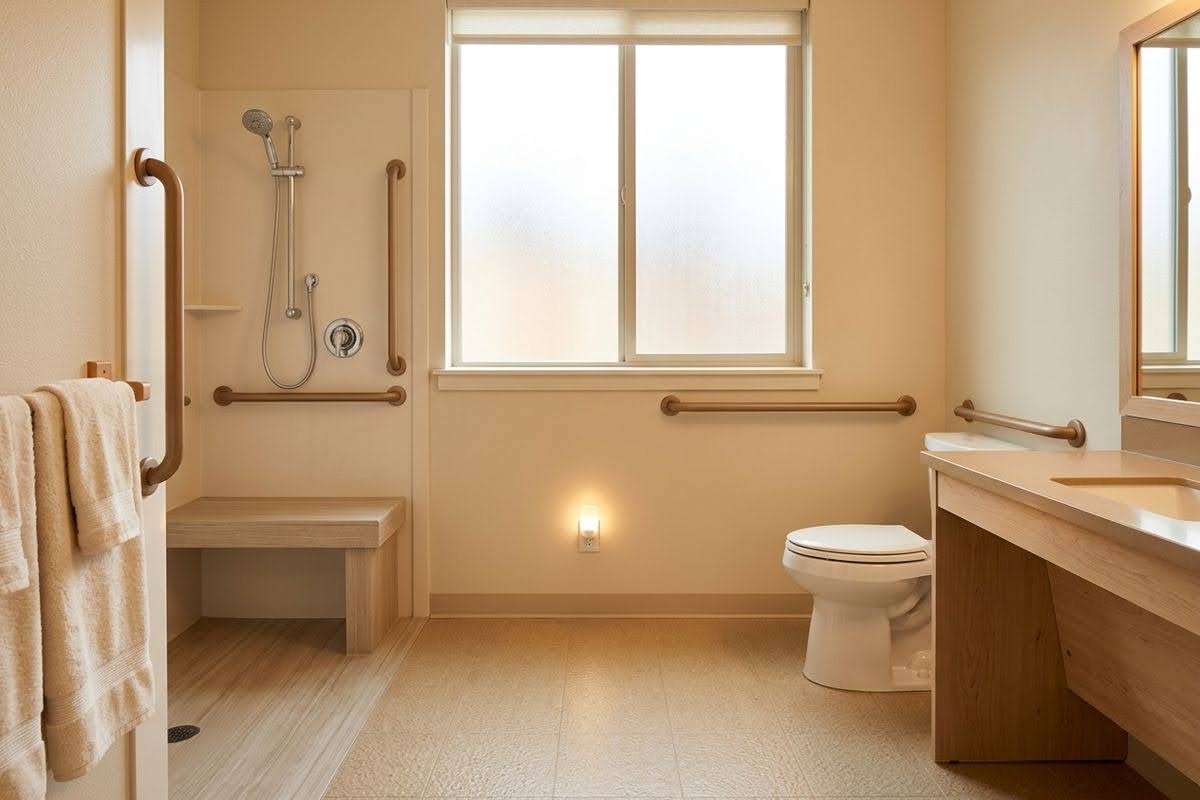
Accessible apartment features can reduce common environmental risks. Grab bars, non-slip bathroom surfaces, appropriate bed heights, and clear routes between frequently used areas give residents a more straightforward space to navigate.
Nighttime Lighting and Clear Pathways
Soft lighting can make the route between the bed and bathroom easier to see after dark. Keeping that route clear of unnecessary furniture or other obstacles further reduces potential hazards. Together, visibility and uncluttered pathways support safer nighttime movement.
Other Ways Memory Care Helps Residents Stay Safe
Fall safety extends beyond the overnight hours. In our Memory Care community, daily routines and Senior Star’s Seven Areas of Wellness support the physical well-being, structure, and engagement of each resident throughout the day.
Consistent Daily Routines
Regular meals, programs, rest periods, and evening routines can give each day a familiar rhythm. In Memory Care, that structure can be adapted around established habits rather than requiring everyone to follow the same schedule. Familiarity remains an important part of personalized support.
Nutrition and Hydration
Regular meals and proper hydration support physical health and energy throughout the day. Good nutrition can also support muscle strength and overall mobility. Making food and drinks readily available helps keep these needs part of the daily routine.
Social and Cognitive Engagement
Social interaction and cognitive engagement can add structure and purpose to the day. Through conversations, games, music, and other programs, memory care communities offer different ways to stay involved. A balanced schedule can also provide natural transitions between active periods and quieter parts of the day.
The Senior Star Difference
Senior Star Elmore Place uses SafelyYou fall-detection technology as another layer of resident support. If a fall occurs, the technology alerts care partners so they can respond promptly while respecting privacy within the resident’s apartment. This reflects Senior Star’s approach to innovation, which connects technology directly to resident safety and human support.
Elmore Place also maintains a 1-to-10 care partner ratio. Having care partners nearby complements fall-detection technology with people who can learn each resident’s routines, preferences, and typical patterns. With our broad approach, our team can easily address nighttime safety while keeping Memory Care centered on each resident as a person.
Explore Memory Care at Elmore Place
Nighttime fall prevention depends on more than any single feature. Overnight support, familiar routines, safer surroundings, daily wellness, and responsive technology each address a different part of resident safety. For families considering Memory Care in Davenport, IA, understanding how these pieces work together can make it easier to evaluate a community’s approach.
At Elmore Place, SafelyYou technology works alongside care partners and a whole-person approach to Memory Care. Families can visit the community, see the environment firsthand, and ask specific questions about overnight support for their loved one. Schedule a tour with our team today to learn more about the life we can offer your loved one.